
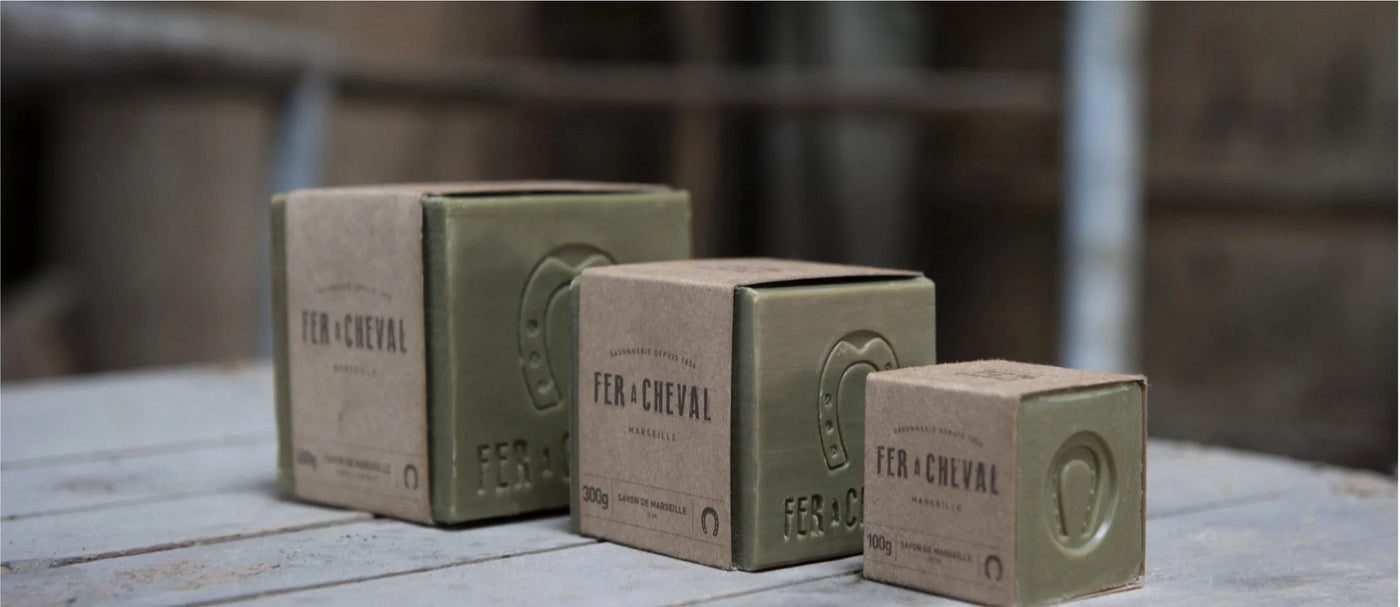
Savon de Marseille has historically been produced in two principal formulations: soap made primarily from olive oil, and soap made from other vegetable oils such as palm and coconut. This collection represents the olive oil tradition. All soaps in this collection share the same formulation, the difference lies in the format of the soap itself.
-
- Fragrance-FreeFER A CHEVAL

Savonnette de Marseille – Olive Oil – 250g Twin Pack
Cauldron-madeHands • Face • Hair • Body • Laundry • Household
Regular price £10.00Unit price -
- Fragrance-FreeLA CORVETTE
Traditional Savon de Marseille – Olive Oil – 750g Soap Flakes
Traditional Olive Oil Laundry Soap – Cauldron MadeLaundry • Household
Regular price £15.00Unit price -
- Fragrance-FreeFER A CHEVAL
Traditional Savon de Marseille – Olive Oil – 300g Cube
Cauldron-madeHands • Face • Hair • Body • Laundry • Household
Regular price £4.75Unit price -
- Fragrance-FreeLA CORVETTE
Olive, Traditional Savon de Marseille - Olive Oil - 100g Bar
Traditional, Cauldron-madeHands, Face, Hair, Body, Laundry and Household
Regular price £3.75Unit price -
- Fragrance-FreeFER A CHEVAL
Traditional Savon de Marseille – Olive Oil – 600g Cube
Cauldron-madeHands • Face • Hair • Body • Laundry • Household
Regular price £6.75Unit price -
- Fragrance-FreeFER A CHEVAL
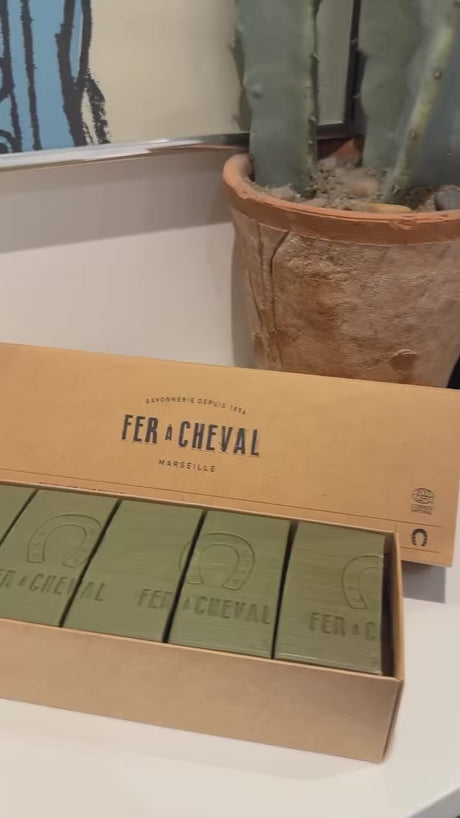
Traditional Savon de Marseille – Olive Oil – 8 × 300g Cubes
Cauldron-madeHands, Face, Hair, Body, Laundry and Household
Regular price £35.00Unit price -
- Fragrance-FreeFER A CHEVAL
Traditional Savon de Marseille – Olive Oil – 95g Sardine Soap on a Rope (Sardo)
Cauldron-madeHands • Face • Hair • Body • Laundry • Household
Regular price £6.00Unit price -
- Allergen-FreeFER A CHEVAL
Traditional Savon de Marseille – Olive Oil – 125g Slice on a Rope
Cauldron-madeHands • Face • Hair • Body • Laundry • Household
Regular price £4.00Unit price -
- Fragrance-FreeFER A CHEVAL
Traditional Savon de Marseille – Olive Oil – 750g Soap Flakes
Traditional Olive Oil Laundry Soap – Cauldron MadeLaundry • Household
Regular price £15.00Unit price -
- Fragrance-FreeFER A CHEVAL
Savonnette de Marseille – Olive Oil – 100g 4 Pack
Cauldron-madeHands • Face • Hair • Body • Laundry • Household
Regular price £10.00Unit price -
- Fragrance-FreeFER A CHEVAL
Savonnette de Marseille – Olive Oil – 100g
Cauldron-madeHands • Face • Hair • Body • Laundry • Household
Regular price £3.25Unit price -
- Fragrance-FreeFER A CHEVAL
Traditional Savon de Marseille – Olive Oil – 2kg Block
Cauldron-madeHands • Face • Hair • Body • Laundry • Household
Regular price £24.95Unit price -
- Fragrance-FreeFER A CHEVAL
Savonnette de Marseille – Olive Oil – 250g
Cauldron-madeHands • Face • Hair • Body • Laundry • Household
Regular price £5.50Unit price -
- Allergen-FreeFER A CHEVAL
Traditional Savon de Marseille – Olive Oil – 100g Cube
Cauldron-madeHands • Face • Hair • Body • Laundry • Household
Regular price £3.35Unit price -
- Fragrance-FreeFER A CHEVAL
Traditional Savon de Marseille – Olive Oil – 240g Soap on a Rope
Cauldron-madeHands • Face • Hair • Body • Laundry • Household
Regular price £7.25Unit price -
- Fragrance-FreeFER A CHEVAL
Traditional Savon de Marseille – Olive Oil – 4 x 65g Slices
Cauldron-madeHands, Face, Hair, Body, Laundry and Household
Regular price £6.00Unit price -



