Savon de Marseille Specialists - Since 2012

Proper Soap - Packed and Dispatched from North Yorkshire

For Washing, Laundry & Cleaning

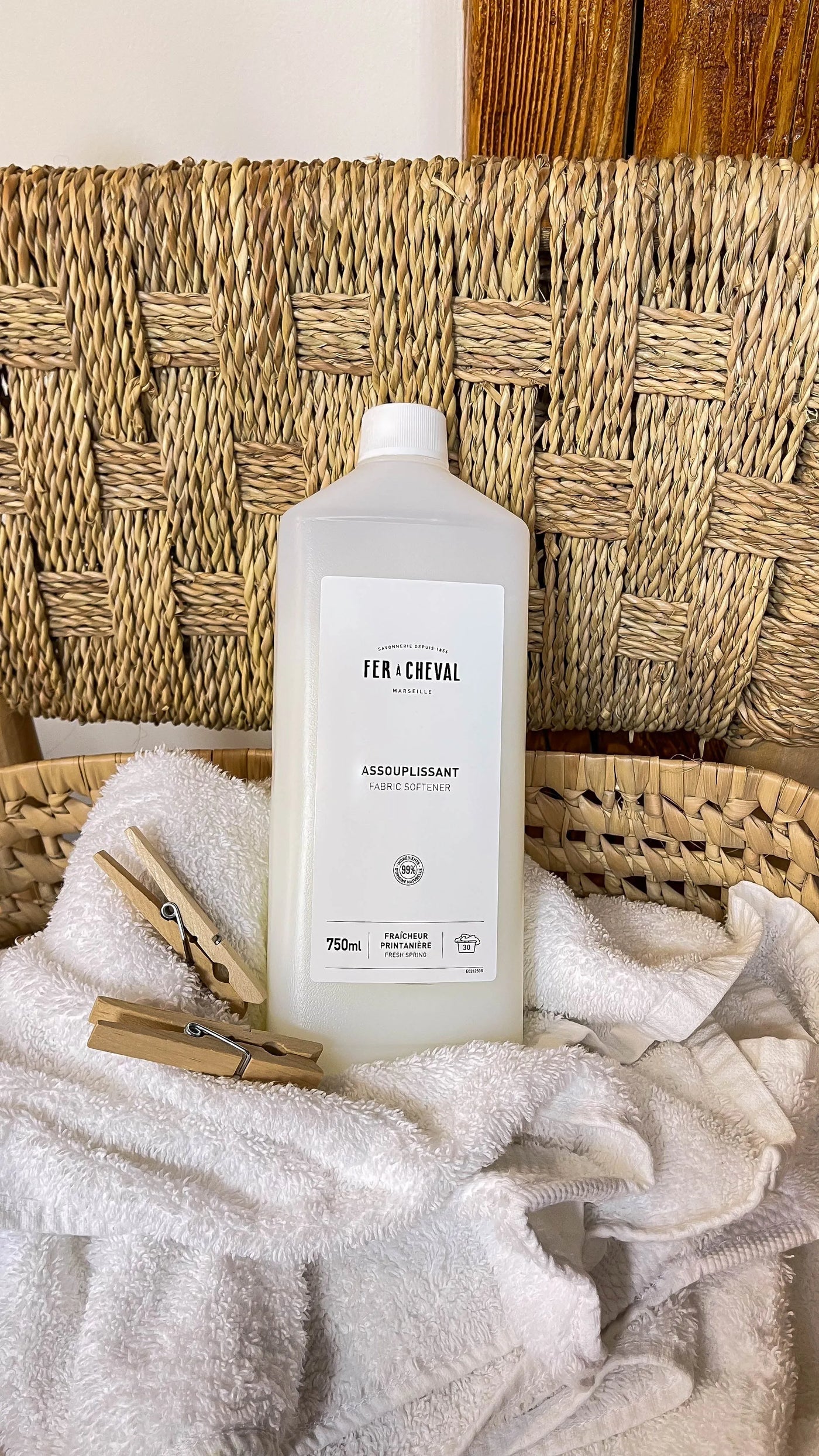
Fabric Softeners

Traditional and Modern Fabric Softeners made in Provence

Fabric softeners are used during the rinse stage of laundry to improve the feel and finish of washed textiles.

While detergents remove dirt and grease, softeners restore suppleness to fabrics by reducing the stiffness that can occur after washing. Different softening methods exist: some formulations condition fibres directly to improve softness and reduce static, while others work by improving the rinse stage of the wash to remove detergent residues and rebalance fabrics.

Our collection brings together carefully selected French fabric softeners that complement soap-based laundry systems, offering gentle fabric care while respecting the natural behaviour of textiles.


Laundry follows two stages: washing removes dirt, rinsing restores the natural feel of fabrics.

  • The Traditional Rinse Method

    Long before commercial fabric softeners existed, laundry was often rinsed with mild acidic solutions such as vinegar.

    This traditional approach helps neutralise alkaline detergent residues and dissolve mineral deposits left by hard water. By restoring balance to fabrics during the rinse cycle, textiles often feel softer and cleaner without being coated with additional substances.

    This method remains popular for households seeking a simple, low-impact approach to laundry care.

  • Fibre Conditioning Softeners

    Modern fabric softeners work differently. Rather than improving the rinse stage, they act directly on textile fibres.

    Conditioning agents lightly coat the fibres, reducing friction between threads. This helps fabrics move more freely, creating a softer feel and reducing static electricity.

    This method is particularly useful for everyday clothing and household laundry where improved softness and easier ironing are desired.

  • Two Different Approaches to Softening Laundry

    Fabric softeners do not all work in the same way.

    Some softeners act directly on textile fibres, using conditioning agents that coat fibres and reduce friction. This creates a softer feel and reduces static electricity.

    Other softening rinses work by improving the rinse stage of the wash. Mild acidic ingredients such as vinegar help dissolve detergent residues and mineral deposits that can make fabrics feel stiff.

    Both approaches aim to restore suppleness to fabrics after washing, but they do so through different mechanisms.

    Understanding this difference allows households to choose the method that best suits their laundry routine.