
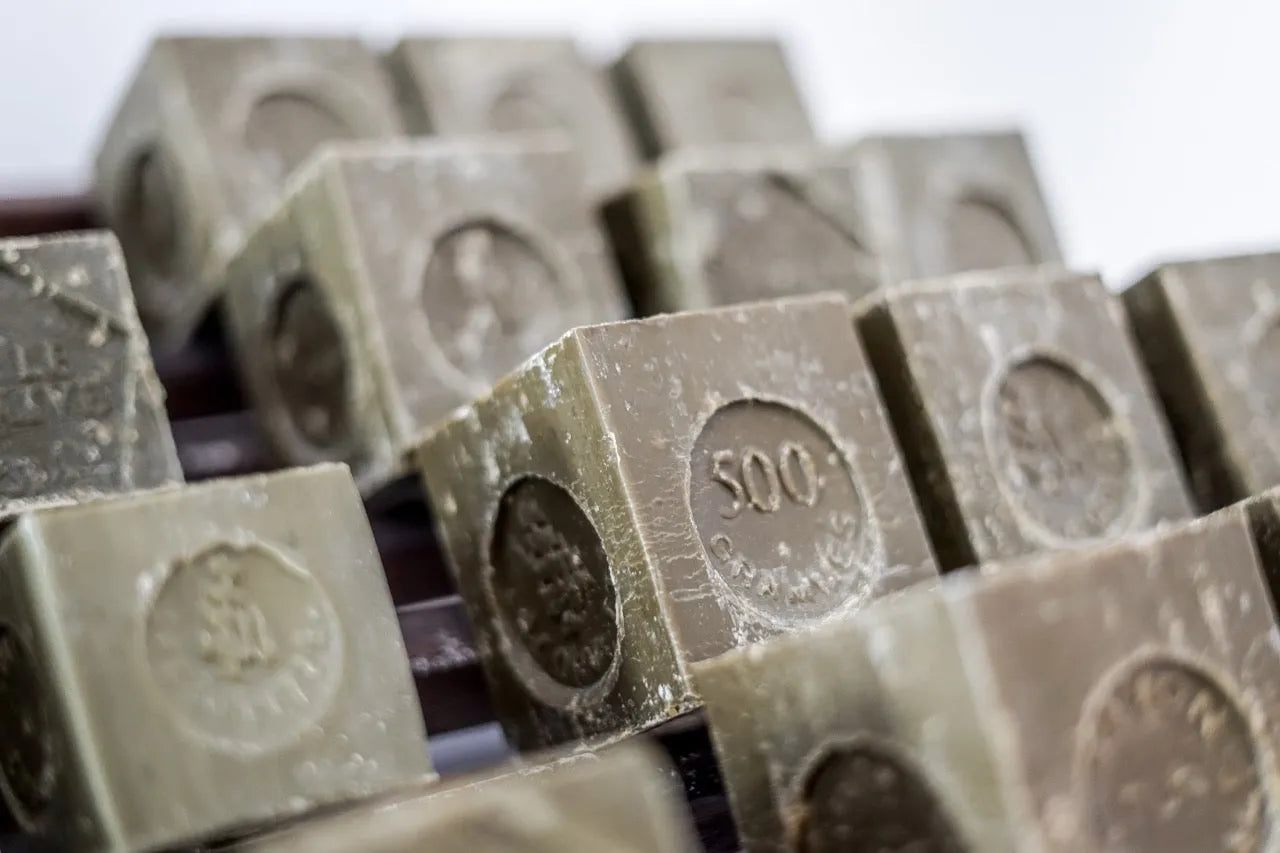
This collection brings together traditional Savon de Marseille cubes from established French savonneries, including olive oil soaps and vegetable oil formulations produced using historic Marseille methods. Whether used for body washing, laundry, kitchen cleaning, or general household use, these soaps remain rooted in the original purpose of Savon de Marseille: simple, versatile soap made properly from oils.
- Fragrance-FreeFER A CHEVAL

Traditional Savon de Marseille – Olive Oil – 600g Cube
Cauldron-madeHands • Face • Hair • Body • Laundry • Household
Regular price £6.75Unit price -
- Fragrance-FreeFER A CHEVAL
Traditional Savon de Marseille – Olive Oil – 300g Cube
Cauldron-madeHands • Face • Hair • Body • Laundry • Household
Regular price £4.75Unit price -
- Fragrance-FreeFER A CHEVAL
Traditional Savon de Marseille - Natural - 300g Cube
Traditional, Cauldron-madeHands • Face • Hair • Body • Laundry • Household
Regular price £4.75Unit price -
- Fragrance-FreeFER A CHEVAL
Traditional Savon de Marseille - Natural - 600g Cube
Traditional, Cauldron-madeHands • Face • Hair • Body • Laundry • Household
Regular price £6.75Unit price -
- Allergen-FreeFER A CHEVAL
Traditional Savon de Marseille – Olive Oil – 100g Cube
Cauldron-madeHands • Face • Hair • Body • Laundry • Household
Regular price £3.35Unit price -
- Fragrance-FreeFER A CHEVAL
Traditional Savon de Marseille – Olive Oil – 8 × 300g Cubes
Cauldron-madeHands, Face, Hair, Body, Laundry and Household
Regular price £35.00Unit price -
- Fragrance-FreeFER A CHEVAL
Traditional Savon de Marseille Bar - Natural - 100g Cube
Traditional, Cauldron-madeHands • Face • Hair • Body • Laundry • Household
Regular price £3.25Unit price -


